Accounts · May 13, 2026
KYC verification: what to expect at online casinos
Identity checks, document types, timelines, and how to avoid phishing.
 Accounts
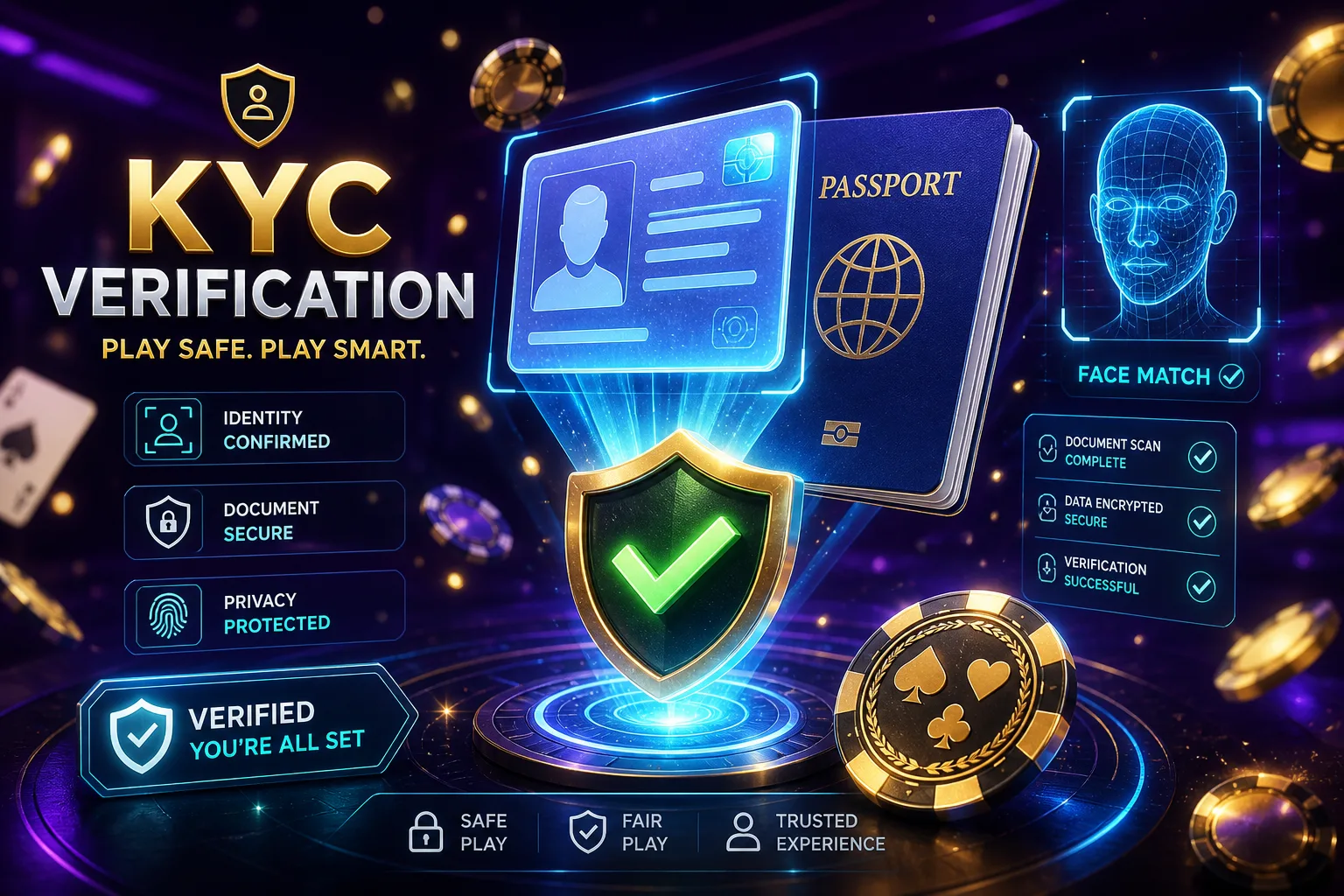
The first time an online casino asks for a photo of your ID, it can feel like friction—especially if you only wanted a short entertainment session. Know Your Customer (KYC) checks are a normal part of regulated and risk-managed gambling products. They exist to confirm age and identity, support anti-money-laundering (AML) controls, and make withdrawals less ambiguous. This guide explains what Filipino adults (18+) should expect: documents, timing, name matching, rejections, and phishing traps. It stays on KYC—not a full security course or deposit tutorial.
Why KYC exists
Operators run KYC for overlapping reasons:
- Age assurance — gambling products are restricted to adults; an ID check is the basic proof.
- Identity assurance — the person withdrawing should be the person who registered.
- AML and fraud controls — platforms monitor unusual patterns; identity files support reviews when funds move.
- Payout integrity — clear identity reduces disputes when sending money to e-wallets or bank accounts.
From a player’s perspective, KYC is less about “distrusting you personally” and more about standard compliance hygiene. Refusing all verification while expecting large, repeated withdrawals is usually unrealistic. Building time for checks into your plan is healthier than depositing more money to “force” a faster payout.
Philippine players who care about legitimacy often look at regulatory context alongside product behavior. Public materials from PAGCOR help explain how formal gaming oversight is framed in the country. KYC on a site does not automatically equal a license—but a serious cashier process without any identity controls is its own warning sign.
Typical documents you may be asked for
Exact lists vary, but most flows cluster around the same evidence types:
Government-issued photo ID
Common examples in a Philippine context:
- PhilID (national ID)
- Passport
- Driver’s license
- Other government IDs the operator’s policy explicitly accepts
Photos should show all four corners, readable text, and no heavy glare. Cropped selfies of only part of the card often fail automated checks.
Selfie / liveness check
Many platforms ask for a selfie holding the ID, or a short liveness capture (turn your head, blink, speak). The goal is to match a real person to the document—not to collect art-direction shots. Follow the on-screen framing guides; filters and heavy beauty modes can cause mismatches.
Proof of address
Less always-on than ID, but common when risk checks escalate. Examples can include a recent utility bill, bank statement, or official correspondence showing your name and address. Policies differ on what “recent” means—read the upload page.
Proof of payment method
If you deposit or withdraw with a bank or e-wallet, you may need a screenshot or statement proving the account is yours. That is why name matching (below) matters so much for GCash, Maya, and bank rails used in the Philippines.
Submit only what the form requests. Extra documents in a random chat thread do not speed reviews and increase exposure if the channel is fake.
When KYC is triggered
Triggers differ by operator risk rules, but players commonly meet KYC when:
- Completing registration or first login enhancements.
- Making a first withdrawal, or crossing a cumulative withdrawal threshold.
- Hitting deposit or loss thresholds that elevate review.
- Changing personal details, password recovery after anomalies, or adding a new payout method.
- The system flags unusual play or payment patterns (not always visible to you).
Some products let you browse or play lightly before a full check; others block cashouts until verification clears. Neither approach is uniquely “scammy” by itself—what matters is whether the requirement is disclosed in terms and handled inside official account pages.
If you plan to withdraw, assume verification may appear and prepare documents early rather than at midnight when a queue is longest. Process guides such as withdrawals make more sense once you accept that identity review can sit on the critical path.
Timelines: what “pending” usually means
Published timelines might say minutes, hours, or one to three business days. Real-world queues stretch when:
- Image quality is poor and a human re-check is required.
- Names nearly match but not quite (middle names, suffixes, married names).
- High-volume promotional periods create backlogs.
- Extra AML review is needed beyond basic ID OCR.
Use the status page inside your account. Repeated new tickets with angry all-caps messages rarely jump a queue; correcting a blurry upload does. Avoid the scam advice that says depositing again will “prioritize” KYC—that pattern helps neither compliance nor your bankroll.
While you wait, do not send IDs to anyone messaging you about the delay. Waiting is annoying; phishing during a wait is dangerous.
Name matching with e-wallets and banks
Philippine cashouts frequently involve e-wallets. A recurring rejection source is simple:
The legal name on your KYC ID must align with the name on the wallet or bank account receiving funds.
Practical habits:
- Register your casino/betting account with the same legal name format you use on PhilID or passport.
- Avoid nicknames or incomplete middle names if your wallet shows the full legal string.
- If you share a family device, do not withdraw to a relative’s wallet “for convenience” unless the operator’s rules explicitly allow it—and most will not treat that as a match.
- Fix mismatches through official support channels with clear photos, not through agents on Telegram.
Name friction is one of the most preventable payout delays. Sorting it before a big withdrawal request saves days of tension.
Common rejection reasons (and calm fixes)
Rejections are often mundane:
- Blur, glare, or cropped edges on the ID.
- Expired ID when policy requires a valid document.
- Selfie does not match lighting, angle, or face obstruction (hats, masks).
- Wrong document type uploaded to the wrong slot.
- Details do not match registration (birthdate typos, reversed names).
- Address proof too old or missing the required fields.
- Payment proof shows a different person’s account.
Fix the specific defect, re-upload once carefully, and keep filenames private if you store copies on your phone. Do not laminate a strategy of submitting ten variants in a minute—that can look noisy to reviewers.
If the operator explains a rejection poorly, ask for the precise field that failed via official support. You are entitled to clarity; you are not entitled to skip AML when thresholds demand checks.
Phishing: fake KYC pages and document theft
Criminals know players get anxious about withdrawals. Fake KYC is a high-yield social engineering theme.
Red flags:
- Links from SMS, WhatsApp, Telegram, or Facebook that ask you to “complete verification in 15 minutes or lose your balance.”
- Pages whose domain only resembles the real site (extra syllables, odd top-level domains).
- Requests for passwords, OTPs, or MPIN as part of “ID verification.”
- Asking you to email or chat photos of both sides of your ID plus a credit card and a selfie to a personal account.
- Screen-share sessions with someone claiming to be compliance staff.
Real KYC uploads happen after you navigate to the site or app you already use and open the verification section yourself. Bookmark that path on a calm day. For broader phone habits around clone apps and OTP theft, see mobile casino security tips—but even without that rabbit hole, the KYC-specific rule is enough: documents stay inside official upload forms.
Never send documents via Telegram to strangers
Support impersonators love Telegram, Messenger, and Viber because they feel informal and fast. No legitimate process requires you to hand PhilID photos to a random handle named “KYC_Admin_PH.”
Rules of thumb:
- Official support may chat inside a logged-in help widget; even then, they should not need your wallet MPIN.
- If someone contacts you first about KYC, assume malice until proven otherwise through the official site.
- After any accidental share, contact the platform through official channels, monitor wallet activity, and consider report options available in the Philippines for identity misuse.
Your ID photos are reusable ammunition for loan fraud and account takeover. Treat them like keys, not like meme images.
Privacy hygiene while you verify
Small habits reduce blast radius:
- Upload from your own phone on a network you trust; avoid cyber-café machines for ID photos.
- Remove ID images from chat drafts and cloud folders you share with others after the review completes (keep a secure personal copy only if you need it).
- Disable preview notifications that might flash ID thumbnails on a lock screen.
- Do not post “finally verified” selfies that include your full ID number.
- Read the operator’s privacy policy at a high level so you know what categories of data they claim to process—our site also maintains a privacy policy for how this informational project handles data.
KYC asks for sensitive data; minimizing copies is part of adult digital hygiene.
How to prepare before you need a cashout
A short preparation list:
- Use your legal name at registration.
- Keep a clear photo of an accepted ID ready (and unexpired).
- Ensure your e-wallet/bank profile matches that name.
- Know where the official verification page lives.
- Expect a queue on first withdrawal; do not panic-deposit.
Players who treat KYC as a planned step—like reading deposit rules—experience less drama than players who meet verification as a surprise boss fight.
FAQ
Can I withdraw without KYC forever?
Sometimes small tests clear without a full file, but meaningful or repeated payouts usually trigger checks. Plan as if verification is part of cashing out.
Is PhilID enough on its own?
Often it covers the photo-ID requirement; you may still need a selfie, address proof, or payment proof depending on risk rules. Follow the on-screen list.
Why was my clear passport rejected?
Common causes include glare, cropped edges, mismatched registration data, or a separate payment-name issue. Read the rejection reason and correct that item.
Someone on Telegram offered to “verify me faster” for a fee. Safe?
No. That pattern is a classic scam. Use official uploads only and ignore fee-for-KYC freelancers.
Closing
KYC at online casinos is the identity layer behind age checks, AML expectations, and cleaner payouts. Expect photo ID (PhilID, passport, or driver’s license), often a selfie, and sometimes address or payment proofs—especially when names must match Philippine e-wallets. Start verification inside official account pages, give queues realistic time, fix mundane rejection causes carefully, and never courier your documents through Telegram strangers. Handled calmly, KYC is paperwork with a purpose—not a reason to abandon caution or to trust the loudest agent in your inbox.